
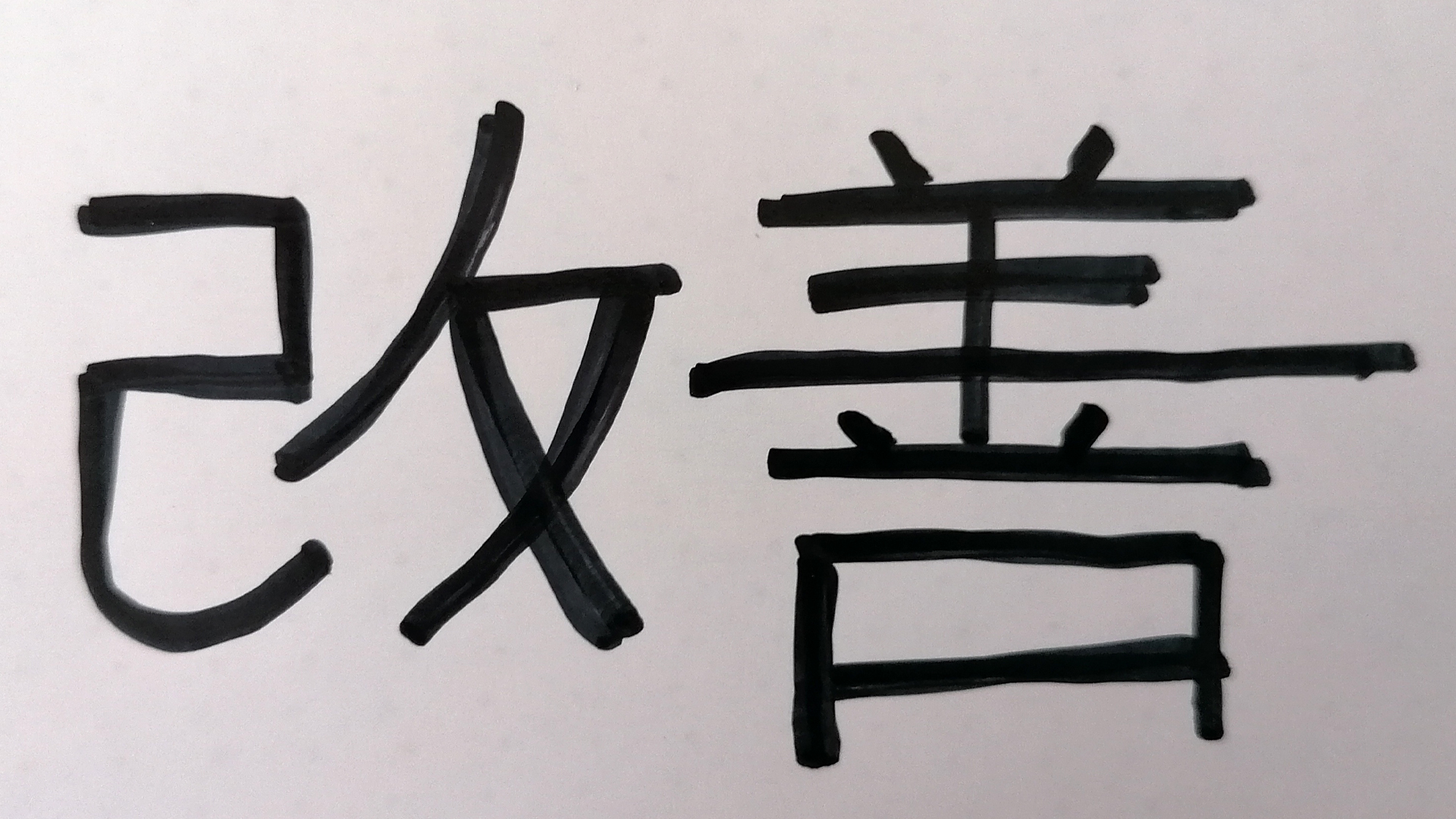
If there is a great willingness to change, management can apply the Kaizen principle. Kaizen means continuous improvement of all corporate functions, including processes, products and services involving all employees and managers.
Kaizen is an important Japanese management concept.
Rechtsanwalt Dipl.-Ing. Michael Horak, LL.M.
Compliance in constant change
Steady change lies in the nature of compliance. Jurisdictions in the field of data protection or technical compliance are constantly subject to adjustments. These adjustments continually put new demands on companies.
Western societies and Asian organizations
Western societies and companies stand for stability and established habits. Asian organisations, on the other hand, tend towards innovative approaches.
Continued pursuit of improvement – that's how you could rewrite Kaizen. The pursuit of permanent improvements in the performance creation process and in terms of performance results comes from the Japanese. The continuous improvement process is aimed at small, well-managed improvement steps in particular. Further improvements are possible in every condition.
Kaizen means improvement
Literally, Kaizen means "improvement." The term includes the two elements KAI (change) and ZEN (goods).

From a seminar for beginners to training on the way to Compliance specialist we offer different levels.
Exercise Kaizen
The concept of corporate governance, which is oriented towards Kaizen, is to keep a continuous improvement process going.
Kaizen never stops.
Rechtsanwalt Dipl.-Ing. Michael Horak, LL.M.
If management involves all employees in small steps, it can achieve a constant improvement in all value creation activities.
Kaizen always requires – in the sense of continuous development – to analyse its own activities.
Rechtsanwalt Dipl.-Ing. Michael Horak, LL.M.
Seeing error as a chance
Problems and difficulties in the company see Kaizen philosophy as an opportunity to learn from the mistakes made.
We advise and support you on all compliance issues.
-
Antitrust proceedings: ECJ confirms acquisition by the EU Commission in respect of corporate restructuring
ECJ, Judgments of 1 October 2026, C-855/24 P (Crown Holdings) and C-845/24 P (Silgan Holdings) When the cartel investigation changes to the EU Commission Companies cannot rely on a trial that has been started at the Federal Cartel Office to be completed there. On 1 October 2026, the European Court of Justice confirmed that the European Commission had initiated antitrust proceedings under certain...
-
Searches 2026: Preparing reception, IT and management
On an unannounced official visit, employees need a short, achievable action plan. Clear contacts, factual documentation and the respect of the respective rights are crucial.
-
AI-Compliance 2026: Controlled release of operational applications
An AI application can affect several legal areas at the same time. A release process must therefore consider the role, function, data and actual use.
-
Compliance Due Diligence 2026: Identifying risks before purchasing a company
Compliance risks influence purchasing decision, contract design and integration. A careful examination is based on the target company and its actual business relationships.
-
Award compliance 2026: evidence of self-cleaning
A breach of compliance can jeopardise participation in public procurement. Self-cleaning depends on the legal requirements and comprehensible measures.
-
Trade secrets 2026: Safeguards instead of flat-rate contractual clauses
Know-how protection begins with the question of which information is really confidential. Contracts, technical authorizations and operational procedures must jointly support this protection.
-
Antitrust 2026: Competition contacts at trade fairs and association meetings
An informal conversation can become relevant under antitrust law if competitors exchange sensitive information. Companies should prepare employees for specific interview situations and offer a reliable internal reporting route.
-

Compliance 2026 – What you need to know today
Compliance law covers many areas. In 2026, compliance is not only a legal obligation but also a competitive factor. Key topics include: Data protection and IT compliance: As digitalisation progresses, companies must ensure that the processing of personal data is lawful. DSGVO obligations include, as well as secure data transmission, access rights, data retention and reporting requirements for data protection violations. Antitrust and competition law: companies...
-
Compliance Annual Planning 2026: Determine Responsibilities and Controls
A good annual planning begins with the events in which a breach of law can have significant consequences. For medium-sized companies, clear managers and few reliably executed controls are often more valuable than an ever longer manual.
-

Common sense and compliance manual
Mr Weber holds the new compliance manual in his hands. Two centimeters thick, cleanly bound, full of references to guidelines, processes and responsibilities. He leaves, nods, sighs. "Actually logical, he thinks. And that's exactly where the story of common sense begins in everyday business. If rules explain everything, but don't prevent anything On Monday morning, Mr Weber is facing a decision...